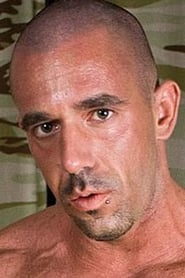
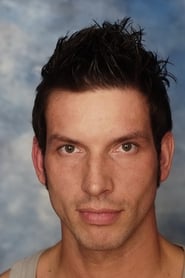
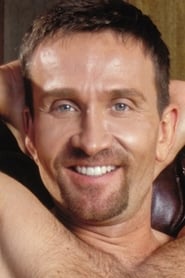
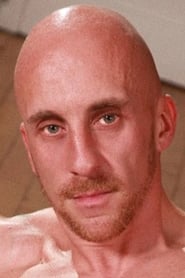
Fans von Vanille-Sex werden sich wahrscheinlich bereits der Tatsache bewusst sein, dass die Produktionen von „Bareback Assault“ eindeutig auf der Hardcore-Seite angesiedelt sind. Wenn Sie also auf der Suche nach Süßem und Romantik sind, ist es wahrscheinlich am besten, sich woanders umzusehen. Wenn du hingegen gerne dabei zusiehst, wie Gruppen geiler Hengste hart miteinander rummachen, dann bist du mit Heated Passion definitiv im richtigen Universum gelandet; Während ein Haufen schwanzverrückter Kerle, darunter Hugh Hunter, Stephen Harte und Matt Sizemore, sich Hals über Kopf auf die beste ungezügelte Action der Stadt einlassen. Glauben Sie uns, diese Jungs ziehen alle Hebel in Bewegung; Von Anfang an lutschen und ficken sie mit Begeisterung, bevor sie einen Schwall Sperma abfeuern und sich gegenseitig von Kopf bis Fuß durchnässt zurücklassen.
Ausführliche Handlung anzeigen Quelle: Wikipedia
A 1959 Senate committee questions ex-AEC Chairman, Lewis Strauss, over his actions during Robert Oppenheimer's security hearing, when a revoked Q-clearance ended Oppenheimer's government advisory role. Strauss, who is nominated for Commerce Secretary, alleges the FBI was suspicious of Oppenheimer since his teaching days, well before anti-Communist William Borden accused him of espionage in 1954. He claims to not have acted against Oppenheimer, despite having many public disagreements with him. In the 1930s, Oppenheimer teaches at Caltech and Berkeley, after studying theoretical physics in Europe. Many Berkeley academics are also Communist Party members, but Oppenheimer does not join himself. After World War II breaks out, Ernest Lawrence of the Radiation Lab cautions Oppenheimer against having communist connections. Oppenheimer scales back, and is approached by General Leslie Groves to lead the Manhattan Project. Oppenheimer proposes a new laboratory at Los Alamos, New Mexico, where they could endeavour to build an atomic bomb before the Nazis. Edward Teller is recruited to Los Alamos, and theorizes that an explosion would cause (global) atmospheric ignition. While his theory is disproved, he starts researching fusion-based weapons instead of working on the proposed fission bombs. After the war, Soviets test a plutonium bomb, similar to one developed at Los Alamos. In a meeting of top advisors, Oppenheimer frustrates Strauss by favoring arms talks with Russia instead of escalating with Teller's proposed thermonuclear weapons. During a heated period of discussion, Oppenheimer's past security lapses are brought up, including rekindling an affair with Communist ex-lover, Jean Tatlock, immediately after gaining his security clearance in 1942. Oppenheimer also protected his friend Haakon Chevalier from an espionage investigation, by directly lying to security officer, Boris Pash. In his later hearing by the Gray Board at the AEC, the board's counsel, Roger Robb, replays these accusations to make Oppenheimer seem guilty of disloyalty towards the US. In the present, Strauss alleges that Oppenheimer turned scientists against him, starting with Albert Einstein at Princeton in 1947. Teller testifies in Strauss' favor, and David Hill of the Chicago Met Lab is expected to do so too. In July 1945, the Trinity plutonium test is successful, and two bombs are subsequently dropped on Japan. Oppenheimer is labeled 'father of the atomic bomb', but his public stance in the post-war years changes towards nuclear non-proliferation. Irritated at constantly being undermined by Oppenheimer, AEC Chairman Strauss conspires with Borden to initiate the 1954 Gray Board hearing. He appoints Robb as the board's counsel, compromising its independence from the AEC. Oppenheimer's humiliation triggers scientists, who had attested to his loyalty and discretion. At Strauss' Senate hearing, Hill claims the scientific community is against him. Strauss loses the Commerce Secretary nomination and with it, his career. A flashback shows Oppenheimer did not mention Strauss to Einstein at all. Consumed by guilt over bringing atomic weapons to the world, he admits to Einstein that the global catastrophe they feared, and then believed was averted, was now ironically inevitable.
Ausführlichere Inhaltsangabe aus
Wikipedia
(Plot, EN), Lizenz CC BY-SA 4.0. Der Bereich kann Spoiler enthalten.